The physician
A cardiologist who reads the evidence from inside.
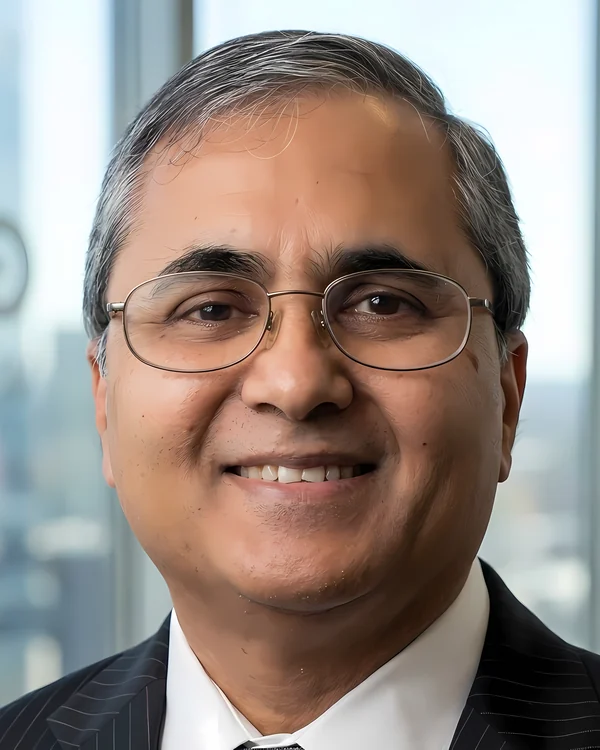
Every protocol in this program is written, and signed, by Dr. Tushar Shah, a board-certified preventive cardiologist who has spent two decades on the evidence this community was left out of.
Why he practices this way
“Prevention is better than cure.”
Four words, adopted in 2011 and never retired. They are why a cardiologist with three advanced fellowships spends his working life on the decade before the event, and why this program exists at all.

The credential ledger
Twenty lines,
each one on the record.
Drawn from the credentialing record and curriculum vitae: rendered as recorded, lapsed items in the past tense, certification status subject to pre-launch verification.
I · Certification
Dr. Tushar Shah, MD
Cardiovascular Disease (ABIM, 2001 / 2011 / 2021, active MOC) · Internal Medicine (ABIM, 2000, active MOC pathway) · Adult Echocardiography (NBE, 1999 / 2009, active maintenance)
Has held board certification in Advanced Heart Failure & Transplant Cardiology (ABIM), Cardiovascular CT (CBCCT), Nuclear Cardiology (CBNC), and Clinical Hypertension (ASH)
Fellow of the American College of Cardiology (FACC)
Fellow of the American Heart Association (FAHA)
Fellow of the Heart Failure Society of America (FHFSA)
Fellow of the American Society of Echocardiography (FASE)
Fellow of the American College of Physicians (FACP)
II · Training
MD, with Highest Honors, University of North Carolina at Chapel Hill School of Medicine
Internal Medicine, Duke University Medical Center
Fellowship, Cardiovascular Disease, Baylor University Medical Center: Chief Cardiology Fellow
Fellowship, Advanced Cardiovascular Imaging (Cardiac CT/MRI), St. Vincent Heart Center of Indiana
Fellowship, Advanced Heart Failure & Transplant Cardiology, University of Kentucky, Gill Heart & Vascular Institute
BA, Biochemistry, cum laude, University of Pennsylvania
III · Academic & leadership
Former Clinical Assistant Professor of Medicine, University of Iowa; former Adjunct Clinical Assistant Professor, The Ohio State University
Former Assistant Program Director, Cardiovascular Fellowship, Kettering Medical Center; former Director of Cardiovascular Imaging, Kettering Health System
Founder and Medical Director, Heart Attack and Stroke Prevention Center
Former Medical Director, Advanced Heart Failure & Transplant Cardiology, University of Louisville; former Medical Director, Advanced Heart Failure and Mechanical Circulatory Support, Geisinger Health System
Former Instructor, Department of Decision Sciences, The Wharton School, University of Pennsylvania
IV · Research & honors
Site Principal Investigator for major cardiovascular outcome trials, including IMPROVE-IT, PROMISE, and TRACER. Earlier research: immunosuppression regimens in cardiac transplantation (Co-Investigator, with Clyde W. Yancy, MD, UT Southwestern); 3D image-guided surgery with real-time echoplanar MRI at UNC, GE R&D, Brigham and Women’s, and ETH Zürich (Co-Investigator); growth-hormone epigenetics at Penn and myocardial energetics at Duke (Research Assistant).
Cardiac Care Provider of the Year, Central Texas, American Heart Association (2004)
Founding member, Society for Cardiovascular Computed Tomography
Served on the Board of Directors, American Heart Association (Go Red for Women)
Distinguished Medical Scholars Program, University of North Carolina School of Medicine
The signature
Read, challenged,
and signed.
Every protocol in this program, every threshold on the science page, and every number this site prints has been read, challenged, and signed by one physician. That is what “physician-led” means here: not a title on the door, but a name on the work.
Tushar Shah, MD, FACC
The record, pointed at the gap
He helped run the trials.
Almost no one in them looked like you.
As a site principal investigator on major cardiovascular outcome trials (IMPROVE-IT, PROMISE, and TRACER), Dr. Shah watched the evidence get made from the inside: the protocols, the endpoints, the enrollment tables. Those enrollment tables told their own story. The trials that shape the world’s cardiac care rarely enrolled South Asian families.
The pattern holds in the genomic era. South Asians are roughly a quarter of the world’s people (~25%), yet less than two percent (<2%) of participants in genomic studies.
The proposed Sehat program is his answer to that absence: protocols written by a physician who has read the evidence from inside, aimed at the community the evidence left out.
of the world’s people are South Asian, approximately a quarter
of participants in genomic studies are South Asian: OurHealth / Broad Institute (Kohler, 2023)
The first step
Bring your family’s history to someone who has read the evidence from inside.
Tell us who you are, and who you cook for. A physician, not a scheduler, not a bot, reads every inquiry.
References · this page
Every line, sourced.
- Physician credentials: rendered wording locked to the credentialing record and curriculum vitae of Dr. Tushar Shah; society roles and honors per About Tushar N Shah MD. Formation of the Heart Attack and Stroke Prevention Center recorded with the Texas Secretary of State (2011).
- Physician voice: “Prevention is better than cure.”: Erasmus, the practice’s founding motto, rendered verbatim. Quotations elsewhere on the site are cited on the pages where they appear.
- Representation in research: OurHealth Scientific Background / Broad Institute (Kohler, 2023): South Asians ≈25% of the world’s population, <2% of participants in genomic studies.